














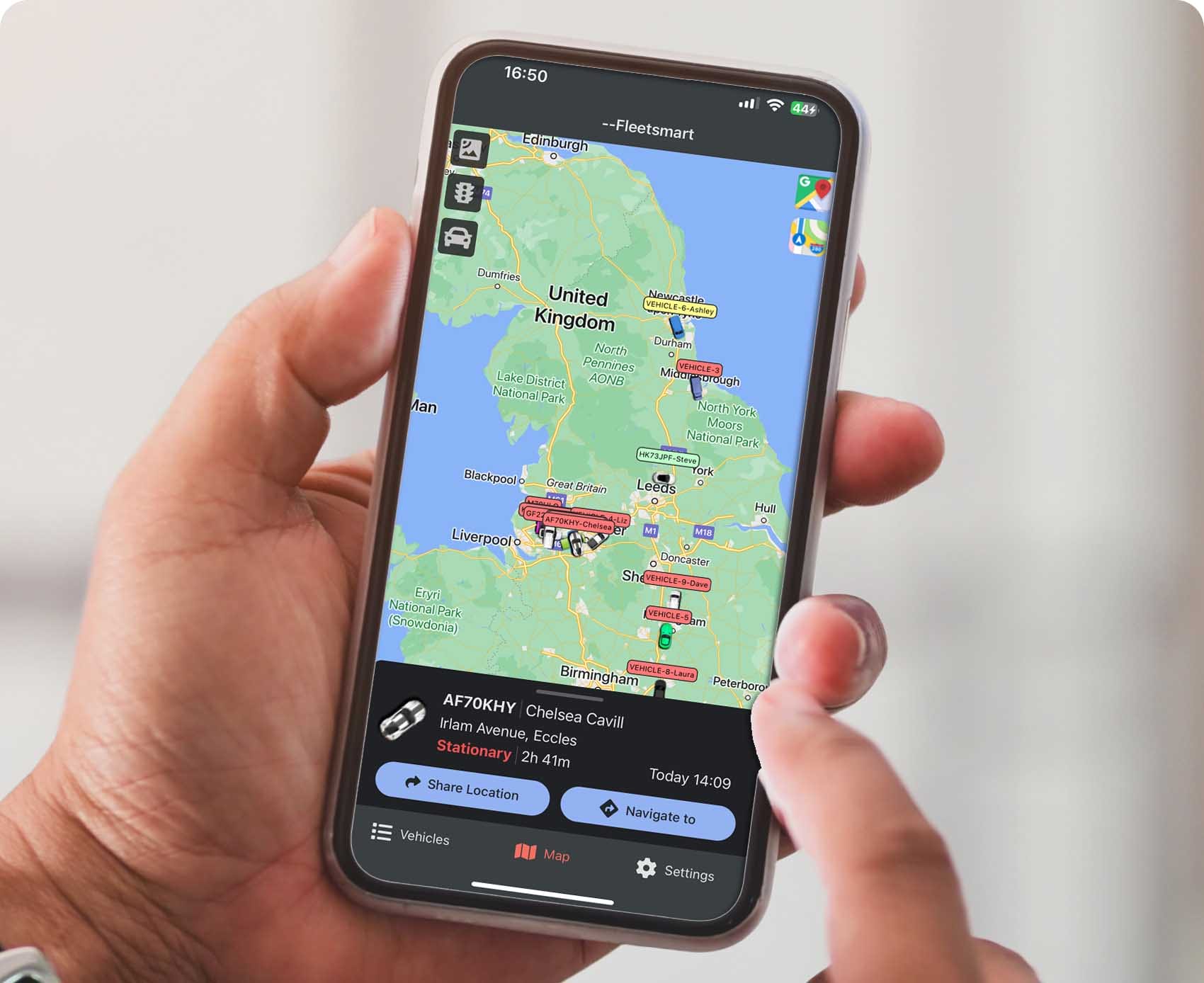
Nowadays, many vehicles are equipped with GPS vehicle tracking systems to help improve security, monitor vehicle use, and increase the chances of recovery if a vehicle is stolen. Vehicle trackers are often installed by the owner of the vehicle, a fleet manager, or a business that needs to monitor company vehicles.
However, tracking a company vehicle without the driver knowing can raise serious privacy, legal, and safety concerns, especially if the vehicle is being tracked without a lawful reason.
In this blog, we’ll look at whether someone can track your company car without you knowing, along with whether tracking devices are legal, and how businesses can use vehicle tracking responsibly.
Can someone track your company car without you knowing?
It’s possible for someone to track a company car without the driver immediately knowing, but that doesn’t automatically mean it’s legal or acceptable.
A GPS tracking device can be small, discreet, and easy to fit to a vehicle. Some trackers are hardwired into the car, while others may be battery-powered or attached externally. This means a vehicle could potentially be tracked without the driver noticing straight away.
However, tracking a car secretly without a lawful reason, consent, or transparency can create serious legal and privacy issues. Commercial vehicle trackers are legal when they’re used properly, such as by businesses tracking company vehicles for legitimate purposes, but drivers should be told what data is being collected, why it’s being collected, and how it will be used.
Can cars be tracked?
Cars can be tracked using GPS vehicle tracking technology. A vehicle tracker uses GPS signals to identify the vehicle’s location. This information is then sent to a tracking platform, allowing the vehicle’s location, journey history, and activity to be viewed through an online dashboard or mobile app.
Cars may be tracked in different ways. Some vehicles have built-in tracking features, while others use separate GPS tracking devices. Businesses may install trackers in company cars, vans, trucks, or fleet vehicles to improve visibility, support route planning, monitor driver activity, and protect vehicles.
The key difference is whether the tracking is being done lawfully and transparently. Tracking a company vehicle for a legitimate business reason is very different from secretly tracking someone else’s private car.
How can a tracking device be put on a car?
A tracking device can be put on a company car, either inside the vehicle, connected to the vehicle’s systems, or attached externally, depending on the device type.
Whether it’s legal depends on the circumstances, such as:
– Who owns the vehicle
– Who is using the vehicle
– Why the tracker is being fitted
– Whether the driver has been told
– Whether there’s a lawful basis for collecting location data
– Whether the tracking is proportionate and necessary
For example, a business may fit trackers to company vehicles to improve fleet visibility, protect assets, review mileage, or support driver safety. In this context, vehicle tracking can be lawful when employees are clearly informed and the data is used responsibly.
However, secretly placing a tracker on someone else’s private or company car without their knowledge or a lawful reason is very different and may raise legal, privacy, or safeguarding concerns.
Are tracking devices legal in the UK?
Tracking devices are legal in the UK when they’re used for legitimate and transparent purposes.
Vehicle trackers are commonly used by businesses to monitor company vehicles, improve efficiency, support customer service, protect vehicles, and manage fleets. In these cases, the use of tracking data should comply with data protection law where personal data is involved.
For work vehicles, businesses should tell employees that tracking is in place. They should also explain what information is collected, why it’s collected, who can access it, and how long it will be kept.
If a company vehicle can be used privately, tracking outside working hours becomes more sensitive. Businesses should be careful about monitoring private journeys unless they have a very clear and lawful reason to do so.
In simple terms, vehicle trackers themselves aren’t illegal. The issue is how they’re used.
What are the risks of tracking a car secretly?
Tracking a car secretly can create serious legal and privacy risks.
If a business is tracking a company car without the driver’s knowledge, the situation may involve harassment, stalking, misuse of personal data, or another unlawful purpose. The exact position will depend on the circumstances, including who owns the vehicle and why the tracker was fitted.
For businesses, secret tracking should be avoided unless there are exceptional circumstances and clear legal grounds. In most cases, employers should be open with employees about tracking and explain how monitoring works.
Secret vehicle tracking can damage trust, create complaints, and put a business at risk of breaching data protection responsibilities.
How Fleetsmart supports legal and transparent vehicle tracking
At Fleetsmart, we provide vehicle tracking solutions for businesses that need clearer visibility over their cars, vans, trucks, HGVs, and wider fleets.
Our systems are designed to support lawful and transparent business vehicle tracking. With real-time location data, journey history, reporting, Geo-Fence alerts, and driver behaviour insights, businesses can manage vehicles more effectively while keeping tracking clear and accountable.
Vehicle tracking can help businesses improve route planning, support customer service, reduce unnecessary mileage, monitor vehicle usage, and protect valuable assets. When used properly, it can provide useful operational data without relying on secret or unclear monitoring.
Speak to our team today for more guidance
If your business needs a reliable vehicle tracking system, we can help you choose the right solution for your fleet.
Whether you manage company cars, vans, trucks, trailers, or assets, our team can help you understand the best setup for your vehicles and how to use tracking responsibly.
Speak to our team today to get a tailored quote for your vehicle tracking requirements.
Hidden vehicle tracking FAQs
Can a tracking device be put on a car?
Yes, a tracking device can physically be installed on a company car. Whether it’s legal depends on who owns the vehicle, why the tracker is being used, whether the driver has been informed, and whether there’s a lawful basis for collecting location data.
Is tracking a car secretly illegal?
Secretly tracking a car can raise serious legal and privacy concerns, especially if the person being tracked hasn’t consented and there’s no lawful reason for the monitoring. If you believe your company car is being tracked without permission, ask your employer for the company’s vehicle tracking policy.
What is hidden vehicle tracking?
Hidden vehicle tracking is when a GPS tracking device is fitted discreetly inside or around a vehicle and the driver hasn’t been told it’s there. Company car tracking is legitimate when used by a business for security and fleet management, but it becomes a concern if the driver isn’t told and there’s no lawful reason for the tracking.
Can an employer track a company vehicle?
An employer can track a company vehicle when there’s a legitimate business reason, such as fleet management, route planning, driver safety, or vehicle security. Employees should usually be informed that tracking is in place and told how the data will be used.
Is a GPS tracker the same as a listening device?
No. A GPS tracker is designed to provide location and journey data. It’s not the same as a listening device and shouldn’t be used to record private conversations.