














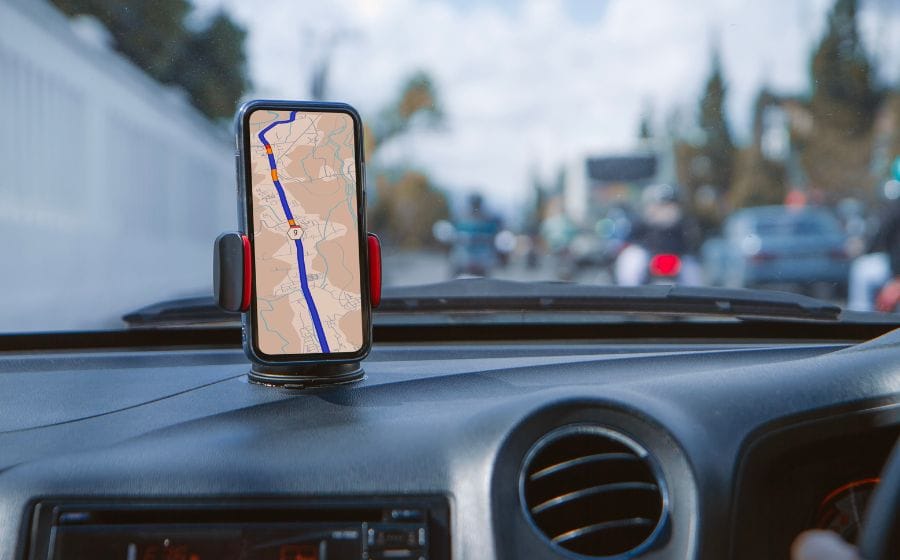
Company car tracking can give businesses valuable visibility over vehicles, drivers, journeys, and day-to-day fleet activity. For businesses managing company cars, vans, commercial vehicles, or mixed fleets, GPS tracking can help improve accountability, protect assets, support route planning, and reduce uncertainty.
However, if your business is using trackers on company vehicles, it’s important to understand the rules around employee privacy, data protection, and transparency.
In the UK, vehicle tracking is legal when it’s used for a clear business reason and handled responsibly. The key is making sure employees know tracking is in place, understand why it is being used, and are told how their data will be collected, stored, and accessed.
In this blog, we’ll explain the main company car tracking laws in more detail, what businesses need to consider, and how to use GPS tracking on company vehicles in a fair and compliant way.
Is it legal to track company cars in the UK?
Yes, it’s legal to track company cars and company vehicles in the UK, provided the tracking is used for a legitimate business purpose and complies with relevant data protection and employment requirements.
A company may have valid reasons for using a vehicle tracker, such as
– Monitoring business vehicle locations
– Improving driver safety
– Protecting company assets
– Planning routes more efficiently
– Reducing fuel waste
– Checking business mileage
– Supporting customer updates
– Helping recover lost or stolen vehicles
– Investigating unauthorised vehicle use
– Managing fleet performance
The issue is not whether vehicle trackers are legal in principle. The issue is whether they’re being used fairly, transparently, and proportionately.
If a vehicle tracker collects data that can be linked to an employee, such as location, journey history, driving behaviour, or vehicle use, that information may be classed as personal data. This means businesses need to handle it carefully and in line with UK data protection requirements.
What laws apply to trackers on company vehicles?
There is no one single company car tracking law in the UK. Instead, businesses need to consider several areas of compliance when using trackers in company vehicles.
These may include:
– General Data Protection Regulation (GDPR)
– The Data Protection Act 2018
– Employment law considerations
– Employee privacy rights
– Internal company vehicle policies
– Health and safety responsibilities
– Disciplinary and investigation procedures
For most businesses, the main focus should be data protection and employee transparency. If your company is collecting location data from company cars, vans, or other vehicles, employees should know what is being collected, why it’s being collected, how it will be used, and who can access it.
This applies whether you’re tracking company cars, vans, commercial vehicles, plant assets, trailers, or a wider fleet.
Do employees need to know about trackers in company cars?
Yes, employees should normally be told that trackers are fitted to company cars or company vehicles.
In most cases, businesses shouldn’t install trackers secretly or use GPS tracking without explaining it to employees. Staff should be told before tracking begins and given clear information about the purpose of the tracking.
This should include:
– Which vehicles are fitted with trackers
– Why the tracking is being used
– What data is being collected
– When tracking is active
– Whether personal journeys are recorded
– Who can view the tracking data
– How long the data is kept
– Whether tracking data may be used in investigations
– How employees can raise questions or concerns
This is especially important if a company car is used for both business and personal journeys. Tracking work journeys may be easier to justify, but tracking private journeys is more sensitive and should be handled carefully.
Understanding consent, lawful basis, and employee GPS tracking
One area that often causes confusion is consent. Many businesses assume that employees simply need to “consent” to GPS tracking on company vehicles. In reality, workplace consent can be more complicated because of the relationship between employer and employee.
Rather than relying only on consent, businesses should identify a clear lawful basis for processing tracking data and make sure the use of tracking is necessary, fair, and proportionate.
This means asking questions such as:
– Why do we need to track company vehicles?
– Is tracking necessary for this purpose?
– Could the same result be achieved in a less intrusive way?
– Are employees aware that tracking is in place?
– Is tracking limited to what the business genuinely needs?
– Are private journeys protected where possible?
– Is the data only available to people who need it?
For example, a business may be able to justify GPS tracking for route planning, vehicle security, driver safety, or proof of delivery. However, using tracking simply to monitor employees excessively or check up on private activity is much harder to justify.
Can you track a vehicle during personal use and outside working hours?
Company car tracking becomes more sensitive when vehicles are used outside working hours or for personal journeys.
If an employee uses a company car for private mileage, businesses should consider whether tracking needs to remain active during personal use. In many cases, it may be appropriate to separate business and private journeys or provide a driver privacy switch, like we can offer here at Fleetsmart.
A driver privacy switch can allow tracking to be paused or restricted during approved private use. This helps businesses balance operational visibility with employee privacy.
Businesses should be clear about:
– Whether personal journeys are tracked
– When privacy mode can be used
– What data is still collected during privacy mode, if any
– Whether emergency or theft-related tracking remains active
– How misuse of privacy mode is handled
– How private mileage is recorded
Tracking outside working hours shouldn’t be used without a clear and lawful reason. If a vehicle is parked at an employee’s home, used privately, or available outside standard working hours, the policy should explain exactly how tracking works.
Can tracking data be used in workplace investigations?
Tracking data may be used as part of a workplace investigation, but businesses should handle this carefully.
If vehicle tracker data may be used for disciplinary matters, unauthorised vehicle use, timekeeping issues, mileage disputes, or customer complaints, employees should be told this in advance, and should be clearly covered in your company vehicle tracking policy.
For example, tracking data may help a business understand:
– Whether a vehicle visited a particular location
– Whether a driver took an unexpected route
– Whether a vehicle was used outside working hours
– Whether a job or delivery was completed
– Whether a vehicle was moved without permission
– Whether mileage records match actual journeys
However, tracking data should be used fairly. Businesses should avoid using vehicle tracking as a hidden monitoring tool or using data for purposes that were never explained to employees.
Hiding or covert tracking devices in company vehicles
In most normal business situations, trackers shouldn’t be hidden from employees for the purpose of monitoring them without their knowledge.
A GPS tracker may be physically discreet for security or practical installation reasons, but that doesn’t mean the tracking itself should be secret. Employees should still be told that tracking is in place and how it is used.
Covert tracking is only likely to be appropriate in very limited circumstances, such as where there is a specific, serious concern and the business has taken appropriate advice. It should not be used as a routine way to monitor staff.
For most businesses, the safer approach is simple: be transparent, explain the purpose of the tracker, and include tracking rules in your company vehicle policy.
How long should vehicle tracking data be kept?
Vehicle tracking data shouldn’t be kept for longer than necessary.
A business may need journey history for operational reasons, customer queries, mileage records, investigations, insurance matters, or compliance checks. However, keeping all tracking data indefinitely is unlikely to be appropriate.
Your business should set a clear retention period that reflects how the data is used. For example, you may decide to keep:
– Recent journey data for day-to-day fleet management
– Mileage records for expenses or reporting
– Incident-related data for investigations
– Theft-related data for insurance or police support
The important point is that employees should be told how long data is kept, and the business should only retain what it genuinely needs.
Common tracking mistakes businesses should avoid
Company car tracking is useful, but it can create problems if it’s introduced without proper planning.
Some of the most common mistakes to avoid include:
– Installing trackers without telling employees
– Failing to explain why tracking is being used
– Using tracking data for purposes not covered in the policy
– Tracking private journeys unnecessarily
– Giving too many people access to tracking data
– Keeping data for longer than needed
– Failing to review the tracking policy regularly
– Relying on verbal explanations instead of written guidance
– Using tracking data unfairly in investigations
– Assuming consent alone is enough
– Ignoring employee questions or concerns
Avoiding these issues can help businesses get the benefits of vehicle tracking while reducing the risk of disputes.
Your company vehicle tracking compliance checklist
If your business uses trackers on company vehicles, a clear compliance checklist can help reduce risk and avoid confusion.
To ensure compliance with GPS tracking on company vehicles, businesses should:
– Have a clear business reason for tracking
– Tell employees before tracking begins
– Explain what tracking data is collected
– Explain how tracking data will be used
– Identify a lawful basis for processing the data
– Consider whether a Data Protection Impact Assessment is needed
– Avoid unnecessary tracking of private journeys
– Use a privacy switch where appropriate
– Limit access to tracking data
– Keep tracking data secure
– Set a clear data retention period
– Include tracking rules in a company vehicle policy
– Make sure employees know who to contact with questions
– Review tracking use regularly
This doesn’t need to make vehicle tracking complicated. It simply means businesses should be clear, consistent, and transparent.
How Fleetsmart helps businesses track company vehicles responsibly
At Fleetsmart, we provide vehicle tracking solutions designed to support businesses with clearer fleet visibility, practical reporting, and day-to-day vehicle management.
For businesses using trackers in company cars or other company vehicles, we can support responsible tracking by helping you monitor vehicles in a clear and structured way.
Features include:
– Real-time GPS vehicle tracking
– Journey history
– Route visibility
– Geo Fence alerts
– Out-of-hours movement alerts
– Driver privacy switches
– Controlled access to tracking data
– Reporting tools
– Support for company cars, vans, trucks, HGVs, trailers, plant, and assets
– UK-based support
This helps businesses use tracking for genuine operational reasons, such as improving visibility, protecting vehicles, supporting driver accountability, and managing fleets more efficiently.
Learn more about how we can support your compliance
Trackers in company cars and company vehicles are legal in the UK when used responsibly. Businesses can use GPS tracking to protect vehicles, improve fleet visibility, support driver safety, and manage operations more effectively.
However, tracking should be fair, transparent, and proportionate. Employees should know tracking is in place, understand what data is collected, and be told how that data may be used. A clear company vehicle tracking policy and careful handling of personal data can help businesses stay compliant while still enjoying the benefits of vehicle tracking.
If your business is considering company car tracking, or you want to review whether your current vehicle tracking setup is being used responsibly, we can help you choose a practical solution for your fleet.
Be sure to get in touch with our team today to discuss your fleet tracking requirements in more detail or for further expert advice on company car tracking.
Company car tracking laws FAQs
Is it legal to track a company car in the UK?
Yes, it’s legal to track a company car in the UK if there is a clear business reason and the tracking is handled responsibly. Employees should normally be told that tracking is in place, why it is being used, and how the data will be handled.
Do employees need to consent to company vehicle tracking?
Consent isn’t always the best basis to rely on in an employment setting. Businesses should identify a lawful basis for using tracking data and make sure employees are clearly informed before tracking begins.
Can an employer track a company car outside working hours?
Tracking outside working hours should be handled carefully, especially if the vehicle is used for personal journeys. Businesses should explain when tracking is active and consider using a driver privacy switch where appropriate.
Can a company track a vehicle used for personal journeys?
A company may be able to track a vehicle used for personal journeys in limited circumstances, but this is more sensitive from a privacy perspective. Businesses should avoid unnecessary monitoring of private use and explain how personal journeys are handled.
How long should vehicle tracking data be kept?
Vehicle tracking data should only be kept for as long as necessary. Businesses should set a clear retention period based on how the data is used, such as for mileage records, customer queries, investigations, or fleet management.
Can tracking data be used for disciplinary purposes?
Tracking data may be used in disciplinary investigations if this has been made clear to employees and the data is used fairly. Businesses should explain this in their vehicle tracking policy and avoid using data in a way employees wouldn’t reasonably expect.
What is a driver privacy switch?
A driver privacy switch allows tracking to be paused or restricted during approved private use. This can help businesses balance operational visibility with employee privacy, especially when company vehicles are used outside working hours.
Do company vehicle trackers need to be visible?
A tracker doesn’t always need to be physically visible, but employees should normally know that tracking is in place. A discreet installation for security or practical reasons is different from secretly tracking employees without telling them.
What are vehicle tracking privacy laws?
Vehicle tracking privacy laws usually relate to data protection and employee privacy. If tracking data can identify an employee, businesses must handle it lawfully, fairly, and transparently under UK data protection requirements.
Can Fleetsmart help with company car tracking?
Yes. At Fleetsmart, we provide company car tracking and wider fleet tracking solutions for businesses. Our systems can help with real-time vehicle visibility, journey history, alerts, reporting, and driver privacy options where appropriate.